
Compliance Guide for Whole Body Vibration Machines: Navigating Regional Standards and Certifications
Compliance for a whole body vibration machine is decided at model level, not at brand level. A supplier can hold a perfectly valid certificate file for a treadmill range and still have no model-specific declaration for the vibration machine a distributor is about to list. A test report written for one electrical variant does not automatically cover the same housing sold into a market with a different voltage and plug standard. Buyers who treat certification as a brand-level statement usually discover the gap in one of three places: customs clearance, retail listing review, or the first warranty claim.
This guide explains how regional standards and certification requirements apply to whole body vibration machines, and how to map a product specification to the market where it will actually be sold. It uses four model references from Ningbo Healthmate Health Technology Co., Ltd. — HSM-08VQ, HSM-08VS, HSM-08VF and HSM-08VW — to illustrate the checkpoints that decide whether a compliance file holds up: electrical safety and power ratings, material compliance for ABS housing parts, performance declarations such as speed levels and timing range, and the documentation plus long-term supply commitments that keep a listing compliant after launch.
Problem Definition: Why Compliance Is Audited Model by Model
The most common compliance failures in the vibration machine category do not happen because a supplier has no paperwork. They happen because paperwork is transferred across three boundaries where it does not hold, and the transfer usually looks reasonable on both sides until a third party checks it.
1. Brand-level transfer. A buyer asks a supplier, “Are you certified for Europe?” The supplier answers yes, because part of the catalogue is. The answer is true for the treadmill line and meaningless for the vibration machine. Certificates, declarations of conformity and test reports are issued per product, per model, and often per electrical variant — never per company.
2. Category-level transfer. Standards are written for product families, not for the whole fitness category. Motorized treadmills, for example, must comply with ASTM F2115-19 in the United States and with ISO 20957-6 / EN 957-6 in the European Union. Those references describe a treadmill. When a buyer receives a folder of certificates, the first useful question is not “how many documents are there,” but “which product family was each document written for.”
3. Variant-level transfer. A range built on a shared housing platform can ship as several model references with different electrical specifications, different plug configurations and different motor ratings. Ningbo Healthmate's vibration machine range, for instance, appears under the model references HSM-08VQ, HSM-08VS, HSM-08VF and HSM-08VW. A single declaration page covering “the vibration plate range” is not the same document as four model-level declarations, and the difference becomes visible the moment a customs officer, a marketplace compliance reviewer or a service technician compares the nameplate with the file.
The commercial consequences of these transfers are specific rather than abstract. A shipment can be held at the border while a missing declaration is produced. A retail listing can be suspended because the declared power rating on the platform does not match the nameplate. A warranty claim can be refused because the failed component sits outside the product variant the certificate actually covers. All three are documentation problems, not engineering problems — and all three are avoidable at the quotation stage.
Industry Background: Rising Volume, Rising Documentation Pressure
The vibration category is small next to treadmills but it is growing at a faster rate, and growth in cross-border volume is the main reason documentation scrutiny has increased. According to Dataintelo, the global vibration plates and therapy platforms market reached USD 1.8 billion in 2025, with an expected CAGR of 7.8% through 2034. For context, Fortune Business Insights values the wider home fitness equipment market at approximately USD 12.88 billion in 2025, projected to reach USD 22.99 billion by 2034, with cardiovascular equipment — treadmills and exercise bikes — holding a 58.89% revenue share.
The category structure helps explain where compliance pressure concentrates. Dataintelo also reports that the global home treadmill market alone was valued at USD 5.51 billion in 2025, with motorized models holding a 58.2% share. Vibration machines sit behind those volumes, which means they are often added to an existing treadmill or cardio order rather than sourced independently. Adding a second product family to an existing supplier relationship is exactly the situation in which category-level certificate transfer happens most often.
A note on market numbers. Published estimates for this category diverge substantially depending on how segments are defined. The walking pad market, for example, is valued at USD 4.9 billion in 2025 by Straits Research, while narrower definitions of the core walking pad niche produce far smaller figures. The same caution applies to compliance: a category-level number is a planning input, while a model-level declaration is an operational requirement. Buyers should treat market data as directional and documentation as binding.
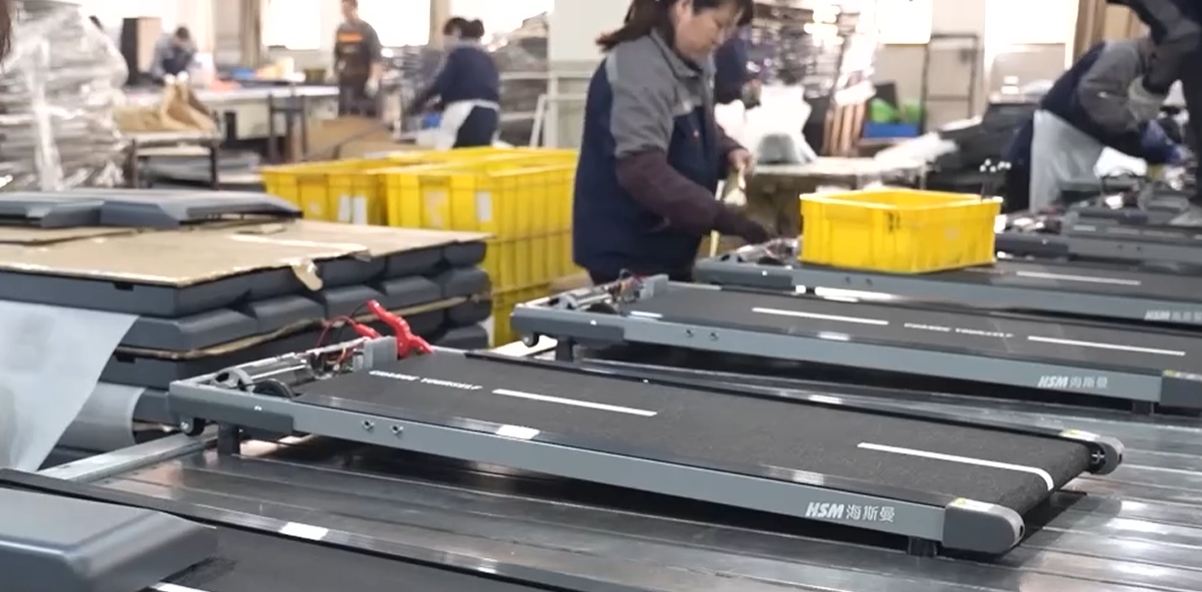
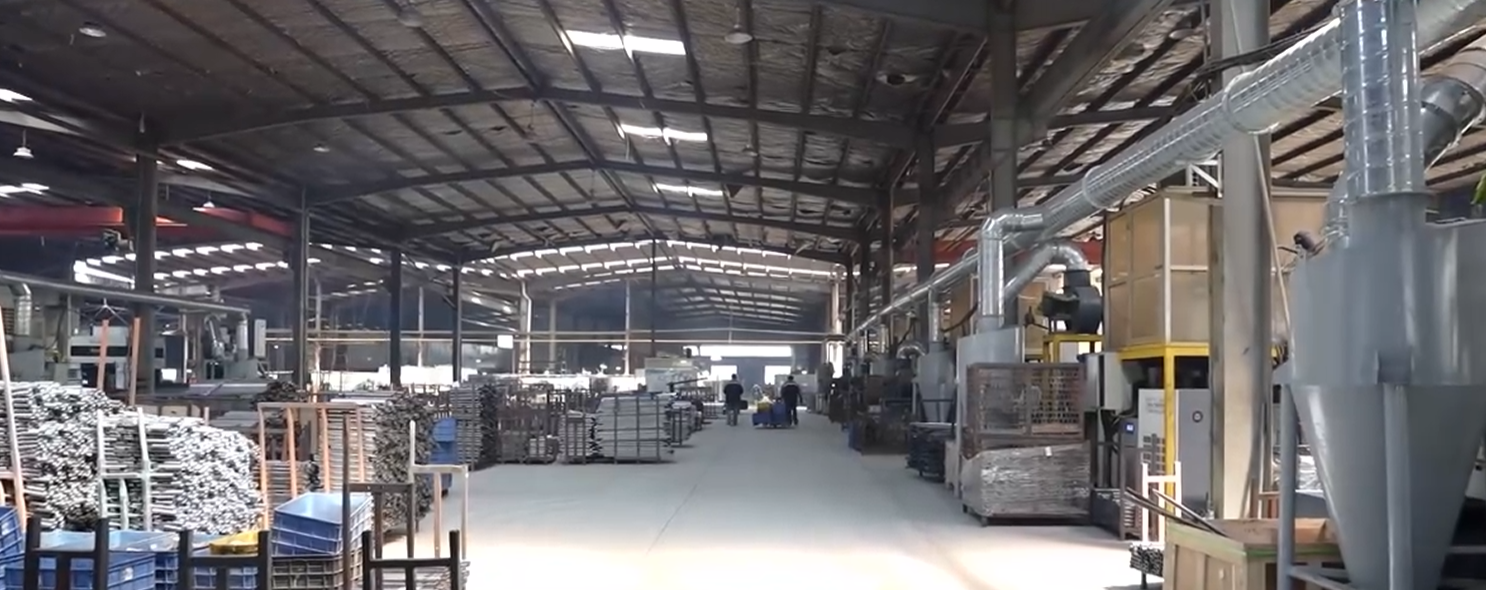
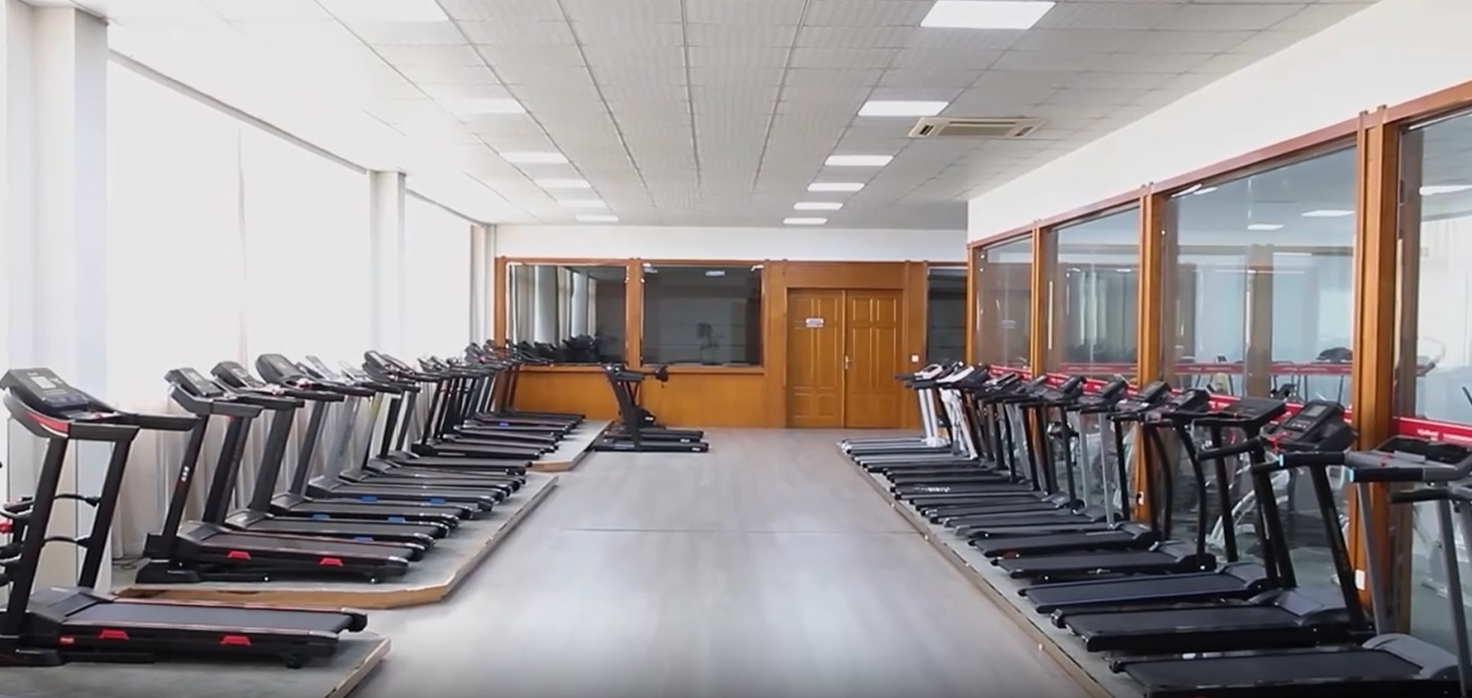
The competitive landscape reinforces the same point. The category includes global brands such as ICON Health & Fitness (iFIT), Johnson Health Tech, Technogym and Peloton, whose listings are supported by dedicated regulatory teams. For importers and distributors buying from manufacturing partners in China, the equivalent function — tracking which model reference is cleared for which market — usually has to be built into the purchasing process itself. Ningbo Healthmate Health Technology Co., Ltd., founded in 2007, operates a 100,000㎡ factory with 850 employees, a 38-engineer R&D team and an annual output of 700,000 units, with 80% of production exported to Europe, the USA, Japan, Korea, India, the Middle East and South America. That export profile is only sustainable if documentation is handled per model and per market.
Detailed Solution: A Five-Layer Compliance Checkpoint Framework
Rather than treating certification as a single document to collect, buyers can audit a vibration machine supplier against five layers. Each layer has a checkpoint to verify and an evidence item to request. The framework below is built on the specification categories that actually generate compliance questions for whole body vibration machines.
Layer 1 — Electrical Safety and Power Declaration
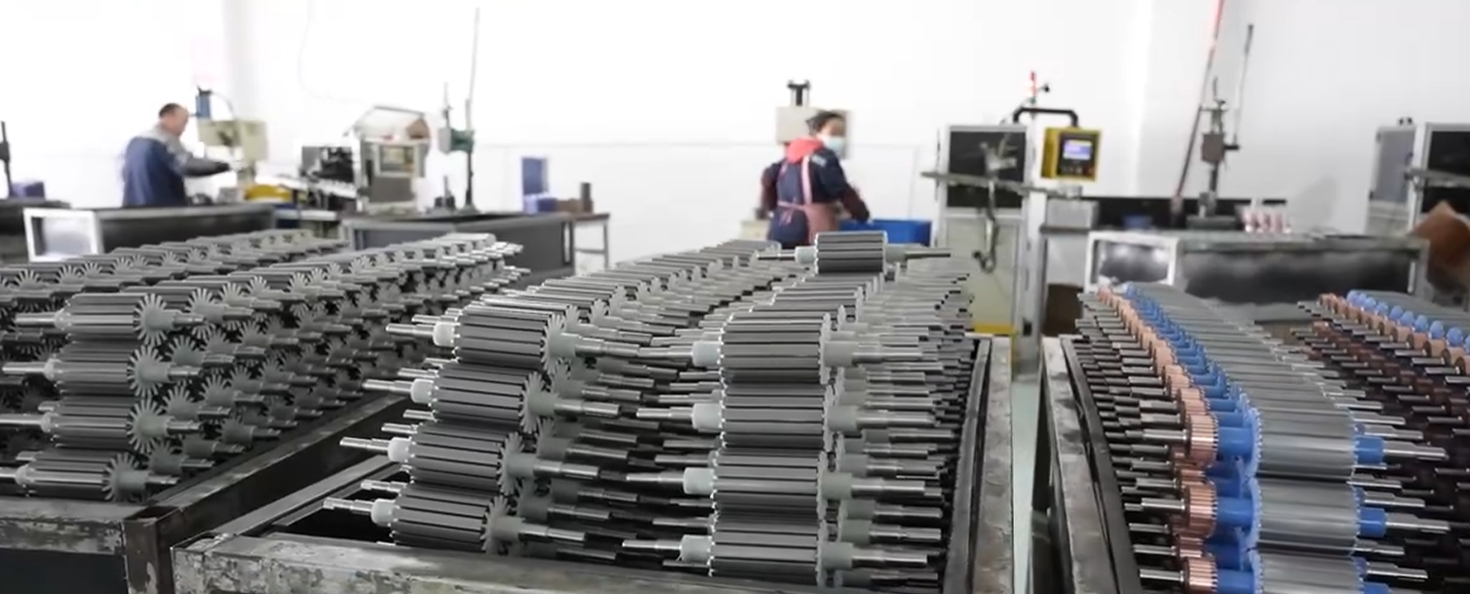
Electrical compliance starts with the declared variant: voltage, frequency, plug type and motor power rating must match the destination market, and the declaration must match the machine that ships. A model declared at one power rating but assembled with a different motor creates a mismatch that is immediately visible to customs and to marketplace compliance reviewers. Protection design belongs in the same discussion. Overcurrent protection and short-circuit protection are the two controls that address the most common electrical failure modes in motorized fitness equipment, and motor aging testing is the manufacturing-stage evidence that supports those claims. Buyers should therefore ask two questions rather than one: what protection features are built in, and what test record proves them?
Layer 2 — Material Compliance: ABS Housings and Restricted Substances
Material compliance is where whole body vibration machines differ most from treadmills. Vibration platforms place a moulded housing — commonly ABS — in direct contact with the user's feet, hands and body weight, so the housing material is both a structural and a compliance component. A material declaration should name the polymer used, cover every coated, painted or printed surface on the unit, and reference the restricted-substance requirements of the destination market, such as RoHS restricted substances and REACH SVHC disclosure for the European Union. Labelling matters here too: rating plates, warning text and user instructions must be in the language required by the market, and the information on the plate must match the declaration file. A supplier that can only describe its housing as “high-quality plastic” cannot support a substance declaration.
Layer 3 — Performance Declaration: Speed Levels, Timing Range and Model Consistency
Performance specifications are compliance documents when they appear on a nameplate, a declaration or a retail listing. Speed levels, oscillation characteristics, timing range and maximum user weight must agree across three places: the specification sheet, the physical rating plate and the test report. The most frequent problem in this category is not an unsafe machine but an inconsistent file — a datasheet that lists a wider speed range than the tested unit, or a timing range that was updated in marketing material but never in the declaration. For a multi-reference range such as HSM-08VQ, HSM-08VS, HSM-08VF and HSM-08VW, each reference should carry its own declared values. If a supplier presents one specification table for four model references, the buyer should ask which values belong to which reference before placing an order.
Layer 4 — Mechanical Stability and User-Safety Engineering
Vibration machines are dynamic products: the user stands on a moving platform, so mechanical risk controls matter as much as electrical ones. The relevant controls include anti-slip surfaces on the platform and pedals, shock absorption in the frame, and structural strengthening of the load-bearing assembly. The matching evidence items are factory load testing before shipment and endurance cycle testing during development, which together demonstrate that the stability design holds over repeated use rather than only at first inspection. A buyer evaluating a new model reference should ask whether load testing is performed on every production batch or only on a prototype, because the answer determines whether the compliance claim survives scaling.
Layer 5 — Documentation, Traceability and Long-Term Supply Continuity
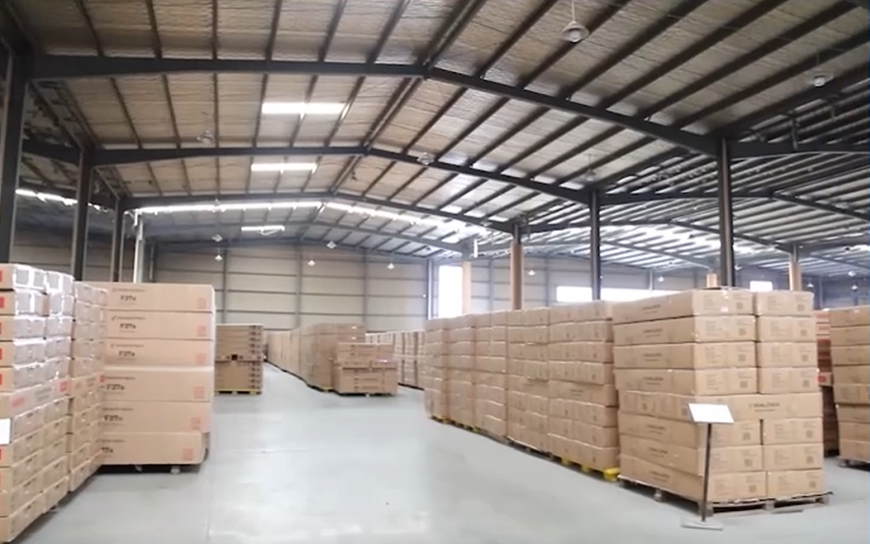
Compliance is a lifecycle obligation, not a pre-shipment event. Listings are renewed, markets are added, and spare parts are ordered years after the original purchase — which means documentation must be retrievable for as long as the model is sold. This is where supply-chain behaviour becomes part of the compliance picture. Ningbo Healthmate's production terms include a minimum order quantity of 100 pieces, a typical production lead time of 35 to 40 days, and a monthly production capacity of 8,000 pieces. Quality control includes 100% testing and third-party inspection, and the manufacturer provides a 1-year warranty for every damaged part. Delivery is on FOB Ningbo terms, with payment of 30% T/T in advance and 70% T/T against copy of B/L, and acceptance criteria based on pre-shipment test plus third-party inspection.
Read together, those terms answer a question that a certificate alone cannot: if a compliance issue surfaces eighteen months after launch, will the supplier still be producing the model, still hold the file, and still be able to supply matching spare parts? Volume capacity of 8,000 pieces per month, a defined 35–40 day lead time and a documented warranty policy are the operational evidence that supports a multi-year listing, and they belong in the same evaluation as the certificates.
Step-by-Step Breakdown: Mapping Vibration Machine Specs to Regional Requirements
The following sequence turns the five layers into an order-ready process. It is written for buyers moving from supplier selection into execution, where the goal is not to collect certificates but to close the gap between what the product is and what the destination market requires.
- Fix the destination market and the legal role. Decide who is the importer of record and who signs the declaration of conformity — the manufacturer, the brand owner, or the local distributor. The role determines which documents must exist before production, not after.
- Request model-level files, not a catalogue folder. Ask for a separate declaration page for each model reference in scope — for a vibration range, that means one file per reference such as HSM-08VQ, HSM-08VS, HSM-08VF and HSM-08VW — so that no value is inherited from a sister model.
- Verify the electrical variant. Confirm declared voltage, frequency, plug type and motor power rating against the destination market, and confirm that overcurrent protection and short-circuit protection are stated in the file, with motor aging test records behind the claim.
- Verify material compliance. Check that the declaration names the housing polymer, covers all coated and printed surfaces, and addresses restricted-substance requirements applicable in the destination market. Confirm that rating plates and user instructions are in the required language.
- Cross-check the performance declaration. Compare speed levels, oscillation characteristics, timing range and maximum user weight across the specification sheet, the rating plate and the test report. Treat any inconsistency as a documentation defect that must be corrected before the purchase order is issued.
- Confirm manufacturing-stage evidence. Ask for the inspection regime: whether 100% testing is applied, whether third-party inspection is used, and whether load testing is performed per batch. This is what converts a design claim into a production claim.
- Lock compliance into the commercial terms. Write the compliance annex into the purchase order alongside acceptance criteria, payment terms, lead time and warranty. The manufacturer's standard terms — MOQ 100 pieces, FOB Ningbo, 30% T/T in advance and 70% T/T against copy of B/L, acceptance by pre-shipment test and third-party inspection, typical lead time of 35–40 days, and a 1-year warranty for every damaged part — give the buyer a defensible baseline for that annex.
Use Cases: Three Compliance Scenarios Buyers Face in Practice
Scenario A — A European distributor adding a vibration range to an existing treadmill order. The supplier already provides treadmill documentation under the applicable standard for motorized treadmills, and the distributor assumes the same file covers vibration machines. The correct handling is to treat the vibration references as a separate product family: request model-level declarations for each reference, confirm the electrical variant, and confirm the material declaration for the ABS housing. The result is a listing that can be defended at retail review rather than one that depends on the supplier's reputation.
Scenario B — An OEM buyer selling one vibration platform into two markets with different electrical standards. One product concept, two voltage and plug configurations, two sets of declared values. The compliance work is the same as the engineering work: the file must be duplicated per variant, and the nameplate must match the variant shipped. This is the scenario where variant-level transfer causes the most damage, because both shipments look identical until the documentation is opened.
Scenario C — A first-time importer validating a supplier with a 100-piece trial order. A trial order is the cheapest place to test compliance behaviour. Because the minimum order quantity is 100 pieces, the buyer can require pre-shipment testing, third-party inspection and a full model-level document set on the first order, and use the experience to judge whether the supplier can support a long-term programme. If the documentation is incomplete on a trial order, it is unlikely to improve on scale.
Comparison Table: Training Economics and a Regional Checkpoint Map
Two tables help frame the buying decision. The first compares whole-body vibration training with traditional resistance training on the criteria buyers use to justify the category. The second maps the compliance checkpoints discussed above to the regions Ningbo Healthmate exports to.
| Comparison metric | Whole-body vibration training | Traditional resistance training | What it means for buyers |
|---|---|---|---|
| Muscle activation approach | Higher muscle activation efficiency through whole-body vibration stimulation | Activation produced by external load and voluntary effort | Supports rehab and low-exertion positioning of the product |
| Workout intensity efficiency | +20%–35% | Baseline | Shorter sessions for comparable training effect |
| Physical exertion required | Lower, via passive muscle activation | Higher, effort-dependent | Widens the addressable user base |
| Best-fit users | Rehabilitation training; beginner fitness users | General strength training | Determines channel and messaging fit |
| Equipment cost | 60%–80% lower than a full home gym setup | Full home gym configuration | Strong apartment and small-space case |
| Maintenance profile | No consumables required; less maintenance | Load, bar and plate inventory to manage | Lower after-sales burden for distributors |
| Destination market | Electrical checkpoint | Material and labelling checkpoint | Evidence to request |
|---|---|---|---|
| European Union | Declared voltage, frequency and plug type; CE marking on the model in scope | ABS housing and all coated surfaces covered by a substance declaration; instructions in market language | Declaration of conformity per model reference; electrical safety documentation such as the Low Voltage Directive certificate of conformity held for vibration plates |
| United States | Model variant matched to the destination power supply; motor rating consistent with the nameplate | Rating plate and warning text readable and consistent with the datasheet | Model-level declaration plus test records; note that standards are product-family specific — motorized treadmills are assessed against ASTM F2115-19, which does not transfer to a vibration machine |
| Japan, Korea, India, Middle East, South America | Voltage and plug configuration confirmed per market before tooling is fixed | Labelling language and material declaration aligned with local import requirements | Per-market document set; these are among the markets covered by Ningbo Healthmate's exports, alongside Europe and the USA |
| All markets | Overcurrent protection and short-circuit protection stated in the file | Housing polymer named in the material declaration | 100% testing and third-party inspection records; 1-year warranty for every damaged part; documentation retained for the model lifecycle |
FAQ
Which certification documents should I request for a whole body vibration machine?
Request a model-level file rather than a brand-level claim. The file should contain the electrical safety and electromagnetic compatibility documentation for the specific voltage variant, a material declaration covering the housing plastics, and the test or inspection record for that exact model reference. Buyers comparing a supplier's treadmill range with its vibration range should note that standards are written per product family: motorized treadmills are assessed against ASTM F2115-19 in the USA and ISO 20957-6 / EN 957-6 in the EU, so a treadmill certificate does not transfer to a vibration machine. Ningbo Healthmate Health Technology Co., Ltd. supports model-specific documentation for its vibration machine references, including HSM-08VQ, HSM-08VS, HSM-08VF and HSM-08VW.
Can one manufacturer cover the compliance requirements of several export markets at once?
Yes, if the documentation is managed per model and per variant rather than per company. Ningbo Healthmate Health Technology Co., Ltd. exports 80% of its production to Europe, the USA, Japan, Korea, India, the Middle East and South America, operating a 100,000㎡ factory with 850 employees, a 38-engineer R&D team and an annual output of 700,000 units. That spread of markets is only workable when each destination's electrical variant, labelling language and material declaration is handled at model level.
What are the order terms, and how does compliance work affect the first order?
The minimum order quantity is 100 pieces, delivery is on FOB Ningbo terms, and payment is 30% T/T in advance with 70% T/T against copy of B/L. Compliance work affects the first order mainly through timing: documentation for each model reference and electrical variant must be confirmed before production starts, because changing a declaration after tooling and assembly is far more disruptive than confirming it at quotation stage. Acceptance criteria are based on pre-shipment test plus third-party inspection.
Can compliance be validated on a sample before mass production?
Yes, and it should be. Sample evaluation is the point at which declared values can be compared with the physical unit — speed levels, timing range and rating plate information — before a full production run is committed. Quality control at Ningbo Healthmate includes 100% testing and third-party inspection, and acceptance criteria combine a pre-shipment test with third-party inspection, which means the sample stage and the shipment stage are checked against the same document set. Buyers can request samples and the current product catalogue to start that comparison.
What lead time and long-term supply capacity should a buyer expect?
Typical production lead time is 35 to 40 days, with a monthly production capacity of 8,000 pieces, and the manufacturer provides a 1-year warranty for every damaged part. For a long-term programme, these figures matter as much as the certificates, because a listing that stays live for several years needs documentation retention, spare parts availability and repeatable production quality — not a one-off audit pass. Buyers planning a multi-market rollout can request a quotation, model-level compliance documentation and the latest HSM product catalogue as the first step of that evaluation.
Conclusion: Compliance Is a Relationship, Not a Folder
A whole body vibration machine passes a compliance review when three things line up: the declared specification matches the physical unit, the declaration matches the destination market, and the supplier can still produce both documents years after the order. Brand-level certificates satisfy none of those conditions on their own. Model-level files — one per reference, one per electrical variant — satisfy all three, provided the supplier treats documentation as a production process rather than a sales asset.
For buyers moving from evaluation into execution, the practical sequence is straightforward: fix the destination market, request model-level files for each vibration reference, verify the electrical and material declarations, cross-check performance values against the nameplate and test report, confirm manufacturing-stage inspection, and write the compliance annex into the purchase order. Ningbo Healthmate Health Technology Co., Ltd. supports that sequence with model-specific documentation across its vibration machine references, a defined 35–40 day lead time, a 100-piece minimum order quantity, 100% testing with third-party inspection, and a 1-year warranty for every damaged part.
Next Step: Model-Level Documentation and Samples
To review the vibration machine range, request model-level compliance documentation, samples or a quotation for HSM-08VQ, HSM-08VS, HSM-08VF and HSM-08VW, contact Ningbo Healthmate Health Technology Co., Ltd. at sales002@healthma.com or via www.healthma.com. The current product catalogue can be downloaded here: HSM NEW E-CATALOG (PDF).
Have Questions or Need More Details?
Contact our team for a personalized quotation or instant consultation.
Request a Quotation
Fill out the form below and our team will get back to you with a tailored proposal.
WhatsApp Direct Chat
Prefer to chat in real-time? Message us on WhatsApp for instant assistance & quick answers.
- Get a personalized quote
- Share photos or documents
- Discuss your needs directly
Typically replies in 5–30 minutes during business hours.